6/29/2009

Alignment and balancing.

For cars, the alignment and balancing maintenance is necessary when the car starts to pull down towards one direction, when at a certain speed it starts vibrating or when you notice an uneven wear out of the wheels.

I think something similar happens to people. You know its time to take corrective actions in your life when you feel your path is going on a different direction than where you want to go; or when, because of the speed at which you are living, you stop vibrating or when your body and mind start to wear you down.

I’m sure all of us, at some point in our lives, maybe even repeatedly, have felt at least one of these three symptoms. What I am not sure though is how fast are we to correct or better yet prevent these problems.

We are always so busy managing our overloaded calendar, trying to be in everybody’s good grace, looking forward to our next promotion, our next salary increase, the annual bonus, the closing of a deal, achieving the quarterly quota, getting public recognition as a great professional; or even in our personal lives, trying to be father of the year, the world’s greatest partner, the splendid host, the great advisor and most reached out friend, etc.

So much in fact, that we completely forget about making time for ourselves, and so our body screams out loud! We become aware of our wear out and we get sick: back spasms, colds for no apparent reason, gastritis and lack of sleep. The projects that once filled us with pride and excitement suddenly feel like a prison and we stop vibrating. We realize that at some point down the road, we took a downturn.

And then we face the awkward and uncomfortable moment of “choosing”. That is, we come up to the point where we have to stop and reconsider the direction our life has taken. We have to evaluate whether we are on the right track and at the pace that feels right or if we are just following the noise that leads masses into indecision.

So its time to have our alignment and balancing and ask us:

  • Is what I am doing today aligned with the principles and interests I value the most?
  • Which of all the things I do, really makes me vibrate?
  • Am I clear about where I want to go and how I want to live my life? And not in a few years, but now.
  • Will the path I am currently in, even if it’s another stepping stone; will take me in the right direction?

It’s time to turn the wheels around, realign our direction and balance our life.

Picture credit: MILINTOC

6/25/2009

Interview with Joseph Jaffe part 1

Well, a promise is a promise, so here it is, the interview I did last week to Joseph Jaffe last week.

Truth be told, the ilumination in the video is not the best, but the content of it, the conversation we had, is really worth it!

And I promise to improve the videos for the next interviews I'll be doing in the up coming weeks.

By the way, I want to thank everybody who participated by sending me the questions they would like to ask Joseph, specially Hebert Hernandez who helped me record the interview.

Now, enjoy the interview! And remember, you can watch the rest of the it in my YouTube Channel.

And don't forgtet to follow Joe in Twitter, visit his YouTube channel JaffeJuice TV or read his blog.

Enjoy!

6/21/2009

What are you feeding yourself with?


Twitts, status updates in FaceBook, MySpace or Orkut, videos posted in YouTube and comments around those; among others, key factors that have changed the way we consume the information around us.

It has never been so easy to connect with so many sources of information at the same time and find out even that a “friend” is doing in Paris.

Incredible! Genious! Or not?

It’s just that at the same time we have turned into professional vouyerists capable of absorbing everything our “followers” and “friends” are doing, we’ve allowed all that disinformation to occupy the important space that we previously allocated to learning.
I know dozens of people, including myself, who have been substituting books and blogs with microblogging and status updates, saturating ourselves with not always useful information.

With this of course, I do not mean that we should give up on Twitter or FaceBook and whatever social network you are in to. Anyone who knows me can tell you that I am and avid user of these platforms and I don’t intend to stop.

That said, what my intention is though, is start to nurture my mind with useful information once again. Spend less time reading empty twits and dedicate more time to those persons who really bring something to the conversation. I mean, unless we have a previous, personal or professional relationship, the possibilities of me caring about you “having a giant hot dog” are pretty thin, none really. However if you have an experience, a lesson, an advice, an opinion or any type of information that offers real value, it won’t matter if I haven’t met you in all my life, I will surely be interested in what you have to say.

But this “information diet” is not only about limiting the time I spend participating in social networks; rather it is about increasing my consumption of blogs, forums and books (e-books too).

It’s about getting back to my old practice of filtering the information I let into my mind; it's about being selective and looking for ways to learn and grow.

A couple of years ago I decided I would not watch anymore news shows on TV nor would I listen to any on the radio or read any papers; that helped improve my mood and even helped me sleep better at night. Back then I chose to get my information from other sources like books, blogs and podcasts from real thought leaders, people who really want to collaborate with others. And so I started working on my blog roll and RSS Feeds from great personalities like Robin Sharma, Seth Godin, Joseph Jaffe or Mitch Joel.

Today I realized I’ve abandoned my blog roll for too long and it is time to start visiting it again!

Picture credit: Solstizio

6/03/2009

5 tips to start building your social network

It’s a pretty common thing, we do it practically every day; we receive, accept and send invitations to connect with a lot of people (that we know in most cases) over various social networks like FaceBook, Twitter and Linkedin. But it is also common that we reject the invites from people we’ve never even heard of before, or worse that people we know but don’t really know us, reject our invitation to connect.

This is something that, because of the line of work I’m in I get to see frequently. Whenever I go to an event or conference, be it as a speaker, as part of the audience or backstage, I get to see the situation from the two perspectives the invitee and the person sending the invitation.

You see, when you go to these type of events its easy to meet very interesting people and exchange points of view if even for just a few minutes. When this happens, in the best case, you made an impact on the  person you wanted to meet and were able to get their contact information; and if you are good at following up, you’ll make sure to send a note to your new contact, the very next day, thanking her for the conversation and inviting her to connect at any given social network to continue your dialog.
But, If you are like most of us, you will most likely forget to do this and months later, when you stumble upon that person in a social network, you will try to add her to your network and expect that she remembers you as if you had been best friends in high school and open her door to you automatically.

Now, let’s be honest. Would you let any stranger that comes knocking down your door into your home? Then why do you expect people that doesn't know you to accept your invitation to be friends with you in FaceBook or recommend you in Linkedin?

You have to work hard at building your network.

Let’s face it, creating a network can be quite a challenge, even for the most popular people.
We were not borned knowing how to do it and the full use of social networks is still misunderstood.

That said, there are a few basic hints that can be very helpful when starting to build your social network:

  1. Participating in social networks, even though its very tempting, is not just about being popular. Rather it is about establishing valuable (both for you and your contacts) connections; and it isdefinitely easier to do add value to people with who you have something in common with. Look for people who share similar interests and values, don’t just try to connect for the sake of having a “larger network”.
  2. Don’t do “cold invites” this is the equivalent to the famous sales cold calls, and really, when have those really worked?
  3. Find your Dr Love. And I don’t mean the typical friend who is always looking to set you up with a blind date, but rather to find out which of your contacts already is friends with the person you want to connect with and ask them to introduce you. I’m sure they will be glad to do it. There is a reason why the six degrees of separation theory exists, do your research, find your cupid and ask them to share some love.
  4. Create your door opener and be part of the conversation. Business, especially those who  work on a B2B scheme have been doing direct mailings that gets their prospects to open the door to their sales folks for a long time and very successfully might I add.
    Twitter, trackbacks, comments sections in blogs and forums are great tools to do precisely this. Most of us who are sharing our content in the form of a blog, a tweet, a video in YouTube, etc. are not only open to feedback but we are actively looking forward to it.
    So, you want to connect with someone you don’t know? Search for their blog or podcast or their profile in Twitter, etc. Listen to what they say, digest it, form an opinion and share it with them. Add value to them, get yourself noticed by them and once you’ve established such a dialog, ask them to add you to their network.
  5. Become connectazible. Transform yourself into someone others want to connect with. Start your own conversation. We all have something to say, experiences to share and anecdotes to tell. Loose the fear and the excuse that no one is going to be interested in what you have to say. Actually, you’d be amazed at how many people share your interests. In a virtual world where there are over 1,300 billion people, I’m sure you can easily find a group of people who are as passionate as you about your subject of interest.

And just like my friend and blogger Phil Gerbyshak says: “Give first, before you ask”.

5/25/2009

Leardership vs managing.

Note: As you have seen in past posts here, at The Daily and the not so, I’ve always been a strong believer of the importance of acting as leaders and developing our main strengths and abilities. That said, this post, I write not only thinking of this but also inspired by Seth Godin’s concept of Tribes (If you can get your hands on the book, don’t miss the chance to read it).

Are you really leading talent or just managing resources?
I ask because once someone told me: “A manager manages projects, challenges, problems, resources. That’s why they are managers, because they manage…” Well, yeah…and a Director, directs and an executive executes…So, what is the difference between and simple manager, director or executive and a leader? Simple and huge!

If you manage resources, you impose your vision, or that of the status quo you represent, of what has to be done and how it must be done, absolutely diminishing the work of your staff. You will not give in even a centimeter of additional room to move for your employees to push and pull the leverages you have ordered them to pull to accomplish the list of tasks you determined will help your company to prosper.
Nevertheless, the problem herein lies in that the status quo is in itself that, something that must not change, that must remain the same, therefore not growing, not evolving, getting stuck, and no matter how hard you try, sooner or later if falls.
This is the model that is costing so much to so many companies, even to those who claim to be innovators. Not only on increasing costs and decreasing revenue; but in talent retention as well. And all because they are not sharing a vision based on values, principles and objectives others can identify themselves with and commit to; therefore thinking that the only way left to get other people to follow them is the old decaying stick and carrot way. And sooner rather than later they end up seeing even the most apathetic of their employees get tired of this model and leave.

On the other hand, if you stop wanting to manage people as if they were just another asset of your company and you focus on defining a worthy mission, on clearly sharing your organization’s vision and actually transforming yourself into an enabler of your team’s talents; not only will you become a leader who maximizes your people’s strengths and abilities, but you will transform your enterprise into a leader’s magnet, into a tribe of very talented and capable people, each exercising and maximizing their own strengths, collaborating and contributing to your organization.

Companies that understand that their real worth lies in its people, in its tribe; that is, in the hands of their collaborators (their employees) and their contributors (clients and vendors), are the ones who are getting ahead.
The leaders of these organizations know that success does not lie in one unique and secret formula nor in one methodology and work process, neither on “Incentivizing” employees and clients, but in creating a tribe of people whose values, principles and interests are so aligned that they will not hesitate to share their strengths, knowledge, commitment, experience and even their own tribes too, in order to achieve their shared objective.


5/10/2009

Quantity vs Quality

This will probably not be a very popular post among the avid users of Twitter, FaceBook, FriendConnect and other social networks, but I have to ask: What is best the quantity of followers/friends you have or the quality of these?

I ask because lately it seems that participating in Social Media has become some sort of popularity contest, instead of a platform for socialization and collaboration.

I frequently see how a lot of people celebrate getting thousands of followers or vice versa following a thousand or more people. But come on, can you really read all their tweets and updates? You’d need to dedicate your entire day to it and I’m afraid you would not finish anyway! And please note this comes from a very avid Twitter and FaceBook user.

It’s nothing new when I say that for me, the great relevance of Social Media resides in the huge collaboration network that can be generated among users and the enormous impact it can have on your personal and professional life.

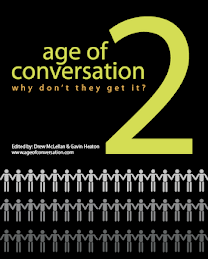
I’ve personally met more people in the last two years than I had in the previous five; and not only have I been able to collaborate with a lot of very cool people recording podcasts, chatting, delivering keynotes or even collaborating with The Age of conversation 2  a global book written by bloggers all around the world, but I’ve also been lucky enough to establish great friendships with people whom I’ve never seen or have seen very few times.

And this is precisely what makes me ask my initial question, because, How can I establish deeper relationships of collaboration if I have to try and pay attention to a thousand people at the same time?

To me, being part of the conversation means actively participating in it by adding value to it and certainly not about seeing how popular I am.

Of course I’d love to reach more people every day, but not in an empty way. I rather add something to their day, just like I’d love for the people I interact with to add value to my life as well. Therefore helping each other, adding value to one another and teaching each other something new; sharing past experiences or an inspiring phrase and an opinion about our content. Entertaining, telling a joke, cheering each other or simply having a good conversation.

And this is precisely the very basic principle behind social networks, is it not? Identifying groups of people who share similar interests and who want to meet more people and share what they know, thus establishing some type of tribe.

And there can be many types of tribes: it can be a tribe of friends like FaceBook where the basic purpose is to connect and reconnect with friends to keep each other up to date; or it can be a professional tribe like the groups in Linkedin or a more specialized tribe depending on hobbies, sports and other interests.

Still,  I am convinced that it does not matter what type of tribe or social network we want to belong to, our success will lie in the few or many interactions we have there and in the value we add to that community.

It’s like Seth Godin says in his last book, precisely called TRIBES: “Showing up isn’t sufficient. Friending ten, twenty or a thousand people in FaceBook might be good for your ego but it has zero to do with any useful measure of success”.

It might be that a commercial brand or a celebrity participating in Social Media is looking to follow thousands of people to increase their reach, but that is just a simpleton and limited vision on how to impose the dying principles of traditional media to the digital space.

It can also be that some professionals are looking to get a lot of followers to, in time, identify those who are more valuable to them. Like a good Twitter friend (who I have just seen one time and for two minutes only) told me when I tweeted this question: “You have to kiss a lot of frogs to find your prince. Quantity takes you to quality”. And there might be some truth in his answer, no doubt.

But I rather think that the quality of our network and the quality of our contribution to it, will eventually take us to quantity.

And who knows what quantity is enough to consider yourself successful when using Social Media.

To me, if I am able to help and touch the life of even just one person a day, even if it is just by making them smile through two points and a parenthesis :), I’m as successful as I want.


Note on picture credit: I can't remember where I first got this picture a few months ago, I tried traking it's creator but had no luck, so if you happen to know who created it, please let me know so I can give him or her proper credit.

5/03/2009

If you don’t have anything good to say…don’t.

These last few days we’ve witnessed the incredible and unstoppable, I dare say, power and reach of social media.

The volume generated with notes, mentions and comments about the present health crisis reached peaks never seen before in Twitter, FaceBook, Google trends and a lot of other communication platforms; erasing all doubts that Social Media is just a fad.

That said, we could also sadly see the lack of maturity and consciousness among many Social Media users.

It’s been really disappointing to see how many people have taken the situation so lightly . And I’m not referring to the common users who often update his or her status in FaceBook. I’m talking about all those persons who up until a few days ago presented themselves as thought leaders or experts in Social Media and who actively promoted (be it because the lacked the information or because they wanted to have a starring role in the conversation), the huge disinformation we’ve seen lately, therefore contributing to generating fear, stress and misunderstanding about the proper precautions required.

It’s really sad to see how, instead of leveraging the power of Social Media to contribute and help control such an evident problem, these pseudo experts and pseudo opinion leaders have just done one of three things: making fun of the situation by telling bad and repeated (too many times) jokes, distributing alarming notes or telling stories about a conspiracy from a shadow government that is trying to unbalance the world; or even worse they’ve done the three!

Fortunately though, a phenomenon that, even though some people would love to ignore, does happen, is that the same rules from our off-line lives operate in our lives on-line. I mean, just like we have to be authentic and congruent in our day to day life, we also need to act like this on-line. Just like people may or may not like us in our real life, this can happen too on-line. And just like we can decide to stop watching a TV show or cancel our subscription to a newspaper, we can decide to unfollow or disconnect from those people who simply are not adding value to the conversation.

Of course, with this post, I do not intend to mark the content generated by some. I also certainly don’t intend to limit the humor (good or bad) of some people and much less do I intend to criticize or expose anyone. After all we all will decide who to follow and what content to consume.

However what I definitely want to say is that people today need other people who will add value to their lives, people who will bring something to the table and who is willing to help.

Just a few weeks ago I wrote a post about what Social Media means to me and in it, I summarized it all in just one word: COLLABORATION.

Collaboration for me means to add value, to support others with ideas and actions, to put in our two cents.

Of course it is ok to take things with humor, and it’s definitely very human (in my original text in Spanish, I said very Mexican) to make fun of pain. It’s ok to use different forums to take our stressful load off our backs and of course we all have a right to express our point of view.

But think about this: one time is very funny, two not so much, three definitely not.

So each of us is free to take things as we see fit? Yes, of course we are.So each of us is free to say what we want? Yes, of course we are.

But what good is it to talk just for the sake of talking and not add any value?

Because the fact that some people technically know how to enter information in Social Media platforms does not mean at all that they really know how to use it.

Writing empty nonsense does not add any value, it just generates noise.

And what do people do when they just hear noise? They turn the source off.

Picture credit: DJLegion

An important note.

The comments, opinions and recommendations posted in this personal blog are my personal thoughts, and doesn't necesarily reflect those of my employer.