Mostrando entradas con la etiqueta positive thinking. Mostrar todas las entradas

10/25/2009

It’s your reflection what you are looking at

One of the things I enjoy most from my work when delivering a keynote or a workshop is the opportunity to learn from others.

You see, to some people those in front, speaking to the audience are there just to teach; but in reality, besides trying to share what knowledge we have to share, we are also there to learn, to take in new points of view, new ideas and even to remember or re-learn some stuff we thought forgotten.
And that is precisely what happened to me last Saturday during my participation in the Merkado 2009 conference in Acapulco; by the end of the presentation, during the Q&As a person in the audience, with his question, reminded me that everything we do in life leaves a trail of who we are, in other words, it’s a reflection of us.

This is what happened; there was this marketing student who asked me something you might have asked yourselves before: “What’s going on with so many light or fast content that I can seek and copy effortlessly? I don’t have to read or research information anymore to do my school work, I can download it easily, no need to read books, I just read other people’s reviews and I only write shallow stuff on twitter and other networks. What are you going to do avoid that this so called age of conversation that you just mentioned in your keynote, turns in to the age of Bob Sponge?”.

The first thing that came to mind and jumped out of my mouth was to explain to him how, back when I studied my BA in communication sciences, fifteen years ago, the question being asked was how to deal with all the violent and erotic content that was being distributed in mass media, specially on TV; and how the answer was as passive as the action it proposed: “Turn the TV off or change the channel”. Did it solve the problem? No. But at least it gave you an easy way out.

However, I said to the person who made the question, todays interactive media allows us to be a whole lot more active than traditional media like TV ever could.
Today, we do not have to accept a simple “push the off button” answer. Today we can make sure that not only we consume the content we believe to be good enough for us and being more selective about it, but we also can or should, actually, contribute to the creation of content that really adds value to us and to the rest of people too.

Today, digital media opens the door to a real conversation and an authentic interaction.

Today one does not need a big editor to be a published author; it is enough to take the initiative to start writing and sharing through platforms like Blogger or Wordpress. You do not need a TV network to produce and distribute your video content; it is enough to arm yourself with a simple camcorder and a user channel in YouTube to share what you do with millions of people. And of course, today, you don’t need to have a radio station, you can simply use platforms like Audacity or Shoutcast to transmit live or create your own podcast too.

But above all, today we don’t have to consume the content that only a few decide to distribute or impose on the rest. Today we can choose what we want to see, when and where we want to do it too.

Therefore today it is no longer valid to say “What is somebody else going to to?” because today, more than ever before, the responsibility and ability to choose, to collaborate and to contribute is on our hands.

So next time you are tempted to think that the only content you have available today is Bob Sponge, remember that what you see is just a reflection of what you yourself have created.

10/19/2009

Why do we do the things we do?


What moves us? Do we work for money, for safety or because it is what we are supposed to do? Why do we help someone? Is it because we expect something in return or because we owe them?

Is there still people who do things just for the pleasure of doing them or to have a purpose in life, or because they believe passionately in an ideal or simply for the pleasure of helping someone?

This weekend I proved they still exist!

Imagine this…

First an old lady who’s smiling face doesn’t hide her more than 70 years of age, tending a hotel souvenirs store (one of those stores that sell everything at a way higher price that anywhere else). She turns to say hi to a young woman who is searching for a simple bag to transport a couple of bottles that she and her husband just received as a gift. The store sells a few artisanal bags that will do the job. There are no other clients in the stores, it is empty. And yet, instead of jumping like a tiger that haunts his pray, the old woman reaches into her desk and pulls out a couple of paper bags (the kind she uses to pack the stuff she sells) and not only does she gladly gives these to the woman, she carefully wraps the bottles in paper as if she had sold them. Always with a smile that only someone with a clean conscience can smile.

Now imagine a waitress in a restaurant at 1:30 am who, when asked, does not reply a simple “we are out” but instead goes to get her own hand bag and out of it she pulls a bottle of anti-bacterial gel of hers that she gladly shares with her patrons.

Imagine now a group of college students who, with no extra grades and no economic compensation, enroll to help with the logistics of a local conference, donating their time and work as if they were actually getting paid.

And finally imagine a group of Young professionals who have a dream, not of getting rich fast and becoming famous, but a dream to help their city business grow. And armed only with that dream, they set out to create a marketing and advertising conference in a city that for years has had no interest in such a thing. And yet they do not do it because there is a business opportunity for the lack of competitors, or because they will fill up their buckets with money, actually they know they won’t. They do it because they know it is what needs to be done to promote their community and market.

None of these four cases earned more money with what they did. None will have, immediately at least, new clients or more revenue for doing what they did. But they all have the certainty of having done what was right, of having followed their own voice; and they have the satisfaction of doing and giving more, because they know that is the secret to becoming remarkable.

What a great example you’ve given me. Thanks Oaxaca. Thanks Fusionados 2009. Thanks for the free lessons. Thanks.

10/11/2009

5 great lessons from an even greater person.

“We make a living with what we get, but we make a life by what we give”, used to say Sir Winston Churchill.

And last week we met a person who has no doubt make a great life with his deeds!


Vinton Cerf, known as one of the co-inventors of the Internet, its architecture and the TCP/IP protocols (which, for those of you who’ve never heard of these before, are the reason why you are on-line right now, reading this blog), was in Mexico City last week, sharing his points of view, opinions and knowledge of course, with government officials, private organizations, media and students.

And although it would be really interesting to share here, a summary of his comments regarding the nurturing of the Internet ecosystem in Mexico, the world and space (Yes, this gentleman already worked on the Internet Interplanetary system), I rather leave that to other media that does a great job explaining that and focus on 5 great life (and personal branding) lessons Vinton Cerf shared with us during his stay:

1. Despise all your achievements never forget to be humble and simple.
If I had to choose one trait to learn from this man, it would be his humbleness and simplicity.
This is a person who made history more than 40 years ago. Engineers and IT professionals all over the world study him in college and our kids will study him as part of the world history along with people like Alva Edison or Graham Bell; and yet he conducts himself with the simplicity and grace of a teacher trying to help his students learn.

2. Be aware of your context and keep yourself open to the opportunities life brings us every day.
How many chances of doing something great have we missed by undermining or underestimating our job? Vint shared with us: “ I was very lucky to be in the right place at the right time…and ended up being a programmer at the UCLA “Network Measurement Center”, which in time took him to create the TCP/IP protocol.

3. Learn to take risks, even when you think you can’t.
Let’s be frank, How many times have not done something because we convinced ourselves that it can’t be done? Vint told us how he learned that “taking the risky option was always the most interesting option.”

4. Surround yourself of people who will challenge you to be better.
Don’t ever stay satisfied with a simple “I cannot do it…” because you already tried it once. Surround yourself of people who will push you to try it one more time!

5. Always be grateful and appreciate the opportunity to serve.
This was, after his humbleness, the most important lesson to me.
Let’s just stop complaining about how our work is not entirely what we expected or about how it is boring or about our clients who don’t understand our work.
The reality is that we all should be, like Vint said: “Grateful of being of service and appreciate the opportunity given to us to do so”.

I would love to summarize each experience Vint Cerf shared with us a few days ago, but that would not be enough, so instead why don’t you watch this conversation with Vinton Cerf, a great person grateful of being of service to human kind.


10/04/2009

Give yourself a chance

How many things we miss doing every day because of fear, because of apathy, because of prejudice and who know what else?

How many people have we judged wrong and how many friendships we gave away? How many opportunities have we let pass for fear of trying? How many yes have we missed because we fear a no? How many unanswered questions we want?


Each day that comes brings a new opportunity to connect, to learn, to grow, to help, and yet each day that passes we let opportunity go.


Thinking about all of this I could not help but remember the movie The bucket list. Remember it? The movie in which an old and sick Jack Nicholson accidentally meets an old and even sicker Morgan Freeman who in no time becomes his most endearing friend and together they write a list of things they want to get done before their sicknesses gets the better of them: travel to Tibet, visit the TajMahal and kiss the most beautiful girl they’ve ever seen.


My question though is, why do we have to wait until a grave situation comes along to decide to do what we’ve wanted to do for so long?


And maybe here someone will say to me: “well Efraín, seeing death so up close changes the way you see life”.

And I say: I doubt it. What’s more I’m sure that not everybody, not always anyway, is changed by such experiences.


A couple of years ago I wrote an old post in this blog where I explained how I am convinced that such thing almost never happens. A person changes his/her attitude towards life only when they are convinced of doing so, if not they simply don’t. I know.

I myself have experienced similar circumstances, both personally and with people I love, and those things didn’t seem to help make any changes.

So what made me change my attitude? Decision, conviction and a clear vision of how I wanted to live my life.


So now, maybe someone will say to me: “Well, the circumstances each person lives in can always limit us in doing what we want to do, but maybe when I change jobs or move to another city or maybe when I retire…”.

And so I think, do you really want to wait 1, 2, 20, 40 years to start living the life you want?


In his book “The 4-hour work week”, Tim Ferris, talks about how he under took the initiative of blending to important concepts – life balance and professional success – into one “Life Style Design”, with the basic premise that it is not necessary to wait for a special event to change our life or wait decades until we can have the time to do the things we like. And so he shares with us a series of recommendations, steps and resources we can use to actually start living our lives the way we want to today and not when we retire.


What’s more, in their recently launched book “Trust Agents”, Chris Brogan and Julien Smith, take Tim’s idea and explain how technology today allows us to, as they call it in their book, create our own game.


Both books are a really great must read, and even though both titles have been quite inspiring for me, I do not pretend to do such a good job convincing you to do such a radical change in one day as they do.


That said, I do want to present you with an idea that just may be as important as the two prior ones, yet might be easier to start: Give yourself a chance.


Give yourself a chance to think, to ask, to give, to teach, to learn, to share, to seek. Award yourself the possibility to do something else, to travel, to accept help and to give help, to meet people and not judge them. Each and every day give yourself a chance to live your life a little more like you want to live it.


As Robin Sharma says, the longest of trips begins with the first step, and every big victory is formed of smaller daily achievements we conquer step by step, day by day.


So, what chance will you give yourself today?

9/12/2009

To which group do you belong?

We see them every day, no matter the company, the hierarchy, the income or the kind of work they do.

And at the same time we see these other people too, just as often as the others, and with these, the company, the job, title or income does not matter either.

They interact with each other every single day, they work together, share office space, have lunch together and some even went to school together, and although some of them come also from very contrasting backgrounds they spend more time with each other than with their own families.

The ones from the first group become best friends with members from their group and from the other one as well. Those from the second one, doesn’t even become friends with their own group members.

At first glance they all are the same professionals we see every day at work, but we need only to pay a little more attention to realize one thing that distinguishes them from one another: some smile others don’t.

The folks in the first group, even though they are still in their daily crusades and know that they still have a lot of ground to cover, are content with their achievements and happy with their job. The do what they like and like what they do.
The ones in the second group are never happy, are over stressed and are never ever satisfied with what they’ve done at work, thus they are in a frantic search for growth within their organizations.

And no! What makes a person belong to one group or the other is not their title or their compensation plan.
I personally know some apparently “very successful” executives who occupy the top C-level positions in their organization and who are often complaining about the predicaments they are in, worrying about stock prices, quarterly quotas or about what their bosses or boards will think of them; I also know other executives who are as high in the organization as the prior ones (if not higher) who enjoy their work every single day as if it was their first (or last) day on the job.
And I also know people who have a much simpler position and who complain every day about their company not valuing them; and yet I know other folks who are grateful for what they do every day, because they know it’s all part of their plan.

So no, title and comp plan does not have anything to do with to which group we belong to.
What’s more in some cases people will often jump from one group to the other without realizing it.

So, what exactly defines to which group we belong to?

From my personal point of view, people who belong to the second group, the always insatisfied and angry one, do not have a clearly drawn career plan and have no idea as to where they are going, or even worse they do have a very specific career plan which they follow to the letter.
In this group, people start their careers maybe as an assistant then get promoted to coordinator, then to supervisor, manager, and with time, a little luck and an unconditional commitment to their career plan they become the great, very important executives they are today.

Now, in the first group, the one where folks are happy and content, people also start their career as an assistant, get promoted to coordinator, then to supervisor, manager, and also with time, a litter luck too and an unconditional commitment too, the also become the very important executives they are today. Only the people in this group are not just committed to their career plan, rather they understand that this is just another building block of a much bigger plan: their life plan.

These people do not complain because things are not going just as they would like and when facing the same challenges and bumps we all face, they always keep in mind one thing: this is just another step we need to take to get to where we want to go.These folks don’t get to the highest hierarchy in the organization thinking they are better than all the rest or not knowing what to do once they are there; they do not stay there just staring at their success to then fall. They get to where they want to get, no matter whether that is the biggest corner office in the building, owning their dance school, being part of a symphonic orchestra or opening a bar on the beach; because they know that getting there is part of their plan. Not their career plan but the plan of how they want to lead their life.

So now only one question remains: To which group do you want to belong?

8/10/2009

Dare to be.

But what if it doesn’t work? And if I run out of money? What will others think of me? Am I too old / too young for this? What if this is not the right place or I am not well prepared?

All these questions plus some fears, critics, past experiences and stories from other people came to my mind as an old friend sat in front of me sharing his frustrations and worries about where is career is taking him.

And while I tried to think of ways to help him, I could not help but think about the way we always focus our attention on the reason why we should not take that important step for our lives.
It doesn’t matter if it’s over our professional life, the beginning of a new relationship, a change of residence or a health project; we typically center our focus on why we should not make that move, and no surprisingly, we never get to where we want to get.

Even during times when we have everything ready and all odds prove to be on our side, in the weirdest way we let that absurd question “What if I’m wrong?” convince us that it is not the right moment to seek our professional independence, form a family, take that long awaited trip or taken on that hobby.

Reasons not to try something are always present. Staying on our safe side of the ocean will always be uncomfortably comfortable and that old saying that goes “Don’t fix it if it’s not broken” will remain a great excuse not to dare to grow.

But what if we do make a mistake? What if circumstances are not ideal? Truth is they never will. The ideal time to change jobs, to open our own business, to move to a new city, etc. can only be provided by us.
The only people capable of creating the best circumstances possible to take that step, is us.

So hurry up and make a mistake

You are afraid of not being ready? Prepare yourself.

Be clear on what you want from life, keep a clear vision of where you want to get, draw your path and imagine every step of the way, think of each step you must take and the challenges you might have to prevent.

If it’s a career change what you seek, study and develop the set of abilities and knowledge you need; if it’s your professional independence you are talking about, generate and save enough financial resources to do so. If it’s a new sport get in good shape, or if it’s a about a trip, learn the basics of your destination.

Prepare yourself and be flexible, understand that there will always be challenges to overcome.
Ask yourself, what is the worst that could happen if I make a mistake? I`m sure you`ll see that the answer is not as bad as you think.

Prepare yourself, be flexible and dare!

Because the worst mistake we can ever make is not doing anything and not daring to be.

7/19/2009

Some great advice

Last week we got very good news from a close friend, he is about to embark on a new professional adventure. He decided to accept an offer to join one of the most important organizations in the country occupying a very important position there.

A very well deserved position might I add; in fact I don’t think there could be a better candidate for it.

We spent some time talking about his new challenges and great opportunities ahead, we share some advice and recommendations, and after such good conversation I kept thinking about the kind of advices I would have liked to get too… So I decided to share a brief list in here:

1- Know your team mates as if they were your family, there will be days where you’ll spend more time with them than with your actual one.

2- Strive to comprehend what really moves and motivates each member of your staff. Understand that not everyone gets excited over the same things and specially that not everybody works just for money. Give meaning to their work.

3- Spend time with them; don’t stay all day inside your office. Work hand in hand with your team but don’t do their work for them.

4- Show how much you really respect your team by empowering them, sharing responsibility and letting them make their own decisions and act accordingly.

5- Celebrate their mistakes. Make sure they are not afraid of making mistakes, this way they will always be trying to do more.

6- Make the right decisions for the right reasons. Always try to do what’s right for the organization and for your team, don’t just do what you think will be the popular thing with your bosses and peers.

7- Never impose your position, rather create a vision that is aligned with the interests and mission of the organization that everyone can follow passionately.

8- Never feel that you are above your team. They are not your employees; in any case it is you who works for them.

9- Understand that you don’t need to be always right or know more than the rest. Recognize your strengths and weaknesses do the same with your team mates and let everybody bring their abilities to the table to strengthen the team.

10- Do not abuse your title. The name in your presentation card does not make you more important or better than the rest. It just means that you have more responsibilities and that you depend more on others.

11- Remember LEADERSHIP means:

Liaison

Emphatic

Adventurous

Dedicated

Enthusiast

Responsible

Simple

Humble

Inclusive

Partnership

No doubt all are good advice, but actually one of the best advices I’ve heard lately is one that precisely my friend shared with me: “No matter what you do, always remember you have a board of directors to report to: your family.

Picture credit: Frank-Chimero

7/13/2009

Your success, your obstacle.

It happens and it happens often. I’ve seen it in friends and colleagues and on the mirror as well.

We work day in and day out on perfecting our trait, we pour our soul into our work and become specialists, experts and in some cases, even some sort of authority or point of reference.

Good for us! But then what?

Of course there is nothing wrong with being successful or being the best at what we do, on the contrary, we should always aim to excel at it. However we often forget to excel at something else: controlling how arrogant we may become after a certain amount of success. And that is just plain wrong.

Granted, it is sweet to be successful. It’s great to have our efforts recognized. And to listen to the sugar coated compliments from other people feeds our ego.

But I insist, what then?

Once we reached our mountain top we need to recognize that we have two options: rejoice in our success, loose focus and fall down or savor it for just a few moments and fix a new horizon and start walking towards it.

And to do this, it is essential that we understand that success has different forms and it is not just in the form of power, material belongings, money or titles; and that, what it’s important to us, might not be so much for others.

We must be humble and make time to learn and identify our greatest strengths and weaknesses.

We need to recognize that our greatest strengths exacerbate our biggest weaknesses.

Nobody is perfect. The fact that you are a great creative does not mean you are a great strategist. If you are great at production you might not necessarily be great at creativity. If you are a Math guru you actually might not be good at explaining it; and if you are an excellent manager it does not mean you are great leader.

Don’t let your greatest strengths turn you blind in front of what you need to improve. Recognize what your weakness is and reinforce it by surrounding yourself and partnering with people who are as good at what you lack as you with your ability.

Admit you are not everything, that you need help from others and that you need to collaborate with them. Open yourself to the possibility of participating with others and let them share their experience with you. You don’t always have to try and prove you are better than the rest.

Picture credit: Redjotter


7/05/2009

Chose your beans.

Author’s note: there is an old saying in Spanish that goes “En todos lados se cuecen habas” which in English means “You can boil beans anywhere” and it’s equivalent to sayings like “We all have our skeletons in the closet”.

“The neighbor’s grass is always greener” is a very common phrase that we hear and say very frequently.

We see how other people live their life, their family, their job, their title, their salary, their schedule, their boss, their benefits and how well they get along doing whatever it is they do and think to ourselves (sometimes out loud too) “How I wish I’d have that too”, and completely forget how well we are doing ourselves until somebody else lets us know how “our grass is greener than theirs”; and so the story goes over and over again.

It doesn’t matter what you do for a living, who you work for or where you live, it’s all the same.

If you work for a global organization you see the corporate bureaucracy while others see the benefits you get; if you work for a small company you focus on the limited resources while others do so on how you are practically part of the directors board; or if you run your own business you think of how hard it is to bring in revenue, while others celebrate your independence.

The reality is that, as the old saying goes: “You can boil beans anywhere”. It does not matter where you work, with who you do or how successful you are, there will always be a small detail, a person, a process or whatever, that will make you want to look at your neighbor’s grass.

So, what exactly does the people we so admire do? You know, those people who seem to have it all and are always smiling and never complaining. Are their lives as perfect as they seem?

A few months ago I read a phrase from Robin Sharma (Whom I’ve frequently cited here) that said that a trait in all great athletes, entrepreneurs, artists, employees, etc. is that “They make hard look really easy”.

And they do so because they work hard at it every day, and because they understand that there will always be some things they will have to do even though they don’t like doing. Yet they do so, because they know that is part of what will allow them to get to where they want to go.They understand that although they would rather avoid them, these are stepping stones to keep moving forward towards their goal. They don’t complain, they “chose their beans” and keep working hard.

The secret is not to search for the perfect life. The path with no rocks does not exist and the only people with no problems at all, are not here anymore.

We all can see our grass green, but we have to acknowledge that there will also be moments that although we’ll want to avoid, they are precisely those “boiling beans” we all have to deal with.

And who knows…they might even turn out to be like Jack’s magic beans!

6/21/2009

What are you feeding yourself with?


Twitts, status updates in FaceBook, MySpace or Orkut, videos posted in YouTube and comments around those; among others, key factors that have changed the way we consume the information around us.

It has never been so easy to connect with so many sources of information at the same time and find out even that a “friend” is doing in Paris.

Incredible! Genious! Or not?

It’s just that at the same time we have turned into professional vouyerists capable of absorbing everything our “followers” and “friends” are doing, we’ve allowed all that disinformation to occupy the important space that we previously allocated to learning.
I know dozens of people, including myself, who have been substituting books and blogs with microblogging and status updates, saturating ourselves with not always useful information.

With this of course, I do not mean that we should give up on Twitter or FaceBook and whatever social network you are in to. Anyone who knows me can tell you that I am and avid user of these platforms and I don’t intend to stop.

That said, what my intention is though, is start to nurture my mind with useful information once again. Spend less time reading empty twits and dedicate more time to those persons who really bring something to the conversation. I mean, unless we have a previous, personal or professional relationship, the possibilities of me caring about you “having a giant hot dog” are pretty thin, none really. However if you have an experience, a lesson, an advice, an opinion or any type of information that offers real value, it won’t matter if I haven’t met you in all my life, I will surely be interested in what you have to say.

But this “information diet” is not only about limiting the time I spend participating in social networks; rather it is about increasing my consumption of blogs, forums and books (e-books too).

It’s about getting back to my old practice of filtering the information I let into my mind; it's about being selective and looking for ways to learn and grow.

A couple of years ago I decided I would not watch anymore news shows on TV nor would I listen to any on the radio or read any papers; that helped improve my mood and even helped me sleep better at night. Back then I chose to get my information from other sources like books, blogs and podcasts from real thought leaders, people who really want to collaborate with others. And so I started working on my blog roll and RSS Feeds from great personalities like Robin Sharma, Seth Godin, Joseph Jaffe or Mitch Joel.

Today I realized I’ve abandoned my blog roll for too long and it is time to start visiting it again!

Picture credit: Solstizio

5/10/2009

Quantity vs Quality

This will probably not be a very popular post among the avid users of Twitter, FaceBook, FriendConnect and other social networks, but I have to ask: What is best the quantity of followers/friends you have or the quality of these?

I ask because lately it seems that participating in Social Media has become some sort of popularity contest, instead of a platform for socialization and collaboration.

I frequently see how a lot of people celebrate getting thousands of followers or vice versa following a thousand or more people. But come on, can you really read all their tweets and updates? You’d need to dedicate your entire day to it and I’m afraid you would not finish anyway! And please note this comes from a very avid Twitter and FaceBook user.

It’s nothing new when I say that for me, the great relevance of Social Media resides in the huge collaboration network that can be generated among users and the enormous impact it can have on your personal and professional life.

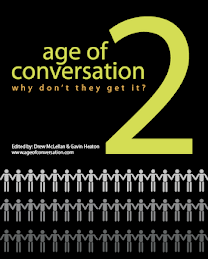
I’ve personally met more people in the last two years than I had in the previous five; and not only have I been able to collaborate with a lot of very cool people recording podcasts, chatting, delivering keynotes or even collaborating with The Age of conversation 2  a global book written by bloggers all around the world, but I’ve also been lucky enough to establish great friendships with people whom I’ve never seen or have seen very few times.

And this is precisely what makes me ask my initial question, because, How can I establish deeper relationships of collaboration if I have to try and pay attention to a thousand people at the same time?

To me, being part of the conversation means actively participating in it by adding value to it and certainly not about seeing how popular I am.

Of course I’d love to reach more people every day, but not in an empty way. I rather add something to their day, just like I’d love for the people I interact with to add value to my life as well. Therefore helping each other, adding value to one another and teaching each other something new; sharing past experiences or an inspiring phrase and an opinion about our content. Entertaining, telling a joke, cheering each other or simply having a good conversation.

And this is precisely the very basic principle behind social networks, is it not? Identifying groups of people who share similar interests and who want to meet more people and share what they know, thus establishing some type of tribe.

And there can be many types of tribes: it can be a tribe of friends like FaceBook where the basic purpose is to connect and reconnect with friends to keep each other up to date; or it can be a professional tribe like the groups in Linkedin or a more specialized tribe depending on hobbies, sports and other interests.

Still,  I am convinced that it does not matter what type of tribe or social network we want to belong to, our success will lie in the few or many interactions we have there and in the value we add to that community.

It’s like Seth Godin says in his last book, precisely called TRIBES: “Showing up isn’t sufficient. Friending ten, twenty or a thousand people in FaceBook might be good for your ego but it has zero to do with any useful measure of success”.

It might be that a commercial brand or a celebrity participating in Social Media is looking to follow thousands of people to increase their reach, but that is just a simpleton and limited vision on how to impose the dying principles of traditional media to the digital space.

It can also be that some professionals are looking to get a lot of followers to, in time, identify those who are more valuable to them. Like a good Twitter friend (who I have just seen one time and for two minutes only) told me when I tweeted this question: “You have to kiss a lot of frogs to find your prince. Quantity takes you to quality”. And there might be some truth in his answer, no doubt.

But I rather think that the quality of our network and the quality of our contribution to it, will eventually take us to quantity.

And who knows what quantity is enough to consider yourself successful when using Social Media.

To me, if I am able to help and touch the life of even just one person a day, even if it is just by making them smile through two points and a parenthesis :), I’m as successful as I want.


Note on picture credit: I can't remember where I first got this picture a few months ago, I tried traking it's creator but had no luck, so if you happen to know who created it, please let me know so I can give him or her proper credit.

5/03/2009

If you don’t have anything good to say…don’t.

These last few days we’ve witnessed the incredible and unstoppable, I dare say, power and reach of social media.

The volume generated with notes, mentions and comments about the present health crisis reached peaks never seen before in Twitter, FaceBook, Google trends and a lot of other communication platforms; erasing all doubts that Social Media is just a fad.

That said, we could also sadly see the lack of maturity and consciousness among many Social Media users.

It’s been really disappointing to see how many people have taken the situation so lightly . And I’m not referring to the common users who often update his or her status in FaceBook. I’m talking about all those persons who up until a few days ago presented themselves as thought leaders or experts in Social Media and who actively promoted (be it because the lacked the information or because they wanted to have a starring role in the conversation), the huge disinformation we’ve seen lately, therefore contributing to generating fear, stress and misunderstanding about the proper precautions required.

It’s really sad to see how, instead of leveraging the power of Social Media to contribute and help control such an evident problem, these pseudo experts and pseudo opinion leaders have just done one of three things: making fun of the situation by telling bad and repeated (too many times) jokes, distributing alarming notes or telling stories about a conspiracy from a shadow government that is trying to unbalance the world; or even worse they’ve done the three!

Fortunately though, a phenomenon that, even though some people would love to ignore, does happen, is that the same rules from our off-line lives operate in our lives on-line. I mean, just like we have to be authentic and congruent in our day to day life, we also need to act like this on-line. Just like people may or may not like us in our real life, this can happen too on-line. And just like we can decide to stop watching a TV show or cancel our subscription to a newspaper, we can decide to unfollow or disconnect from those people who simply are not adding value to the conversation.

Of course, with this post, I do not intend to mark the content generated by some. I also certainly don’t intend to limit the humor (good or bad) of some people and much less do I intend to criticize or expose anyone. After all we all will decide who to follow and what content to consume.

However what I definitely want to say is that people today need other people who will add value to their lives, people who will bring something to the table and who is willing to help.

Just a few weeks ago I wrote a post about what Social Media means to me and in it, I summarized it all in just one word: COLLABORATION.

Collaboration for me means to add value, to support others with ideas and actions, to put in our two cents.

Of course it is ok to take things with humor, and it’s definitely very human (in my original text in Spanish, I said very Mexican) to make fun of pain. It’s ok to use different forums to take our stressful load off our backs and of course we all have a right to express our point of view.

But think about this: one time is very funny, two not so much, three definitely not.

So each of us is free to take things as we see fit? Yes, of course we are.So each of us is free to say what we want? Yes, of course we are.

But what good is it to talk just for the sake of talking and not add any value?

Because the fact that some people technically know how to enter information in Social Media platforms does not mean at all that they really know how to use it.

Writing empty nonsense does not add any value, it just generates noise.

And what do people do when they just hear noise? They turn the source off.

Picture credit: DJLegion

4/12/2009

3 simple reasons why we should never provide personal feedback through e-mail

If you are part of any type of organization, be it a global corporation, a non-lucrative organization, an education institution or simply the member of a family or a group of friends at least once, but surely a lot more than that you’ve had to provide and receive feedback on your work, your performance, your behavior, your proposals, your ideas or about the people you surround yourself with or just about whether or not you think a situation is right or wrong.

Without a doubt everybody, and I mean everybody receives and provides constant feedback all of the time, but sadly though, the fact that we do it often does not mean that we know how to do it right, no matter if we hold an executive title or if we’ve had prior training on the matter.

That is why I wanted to share 3 reasons why I am convinced that we should never provide personal feedback through e-mail:

  1. All feedback needs to be provided in a timely punctual fashion. If the reason why you need to provide your feedback to someone else is so important, you cannot wait until the other person receives, reads and digest what you have to say, much less can you assume that the person is going to do it right after you click on send; so if you are going to share your point of view and provide some feedback to help another person improve or correct an action, you have the moral obligation of doing it face to face.
  2. They say that feedback is a gift. And a gift is a present, so how exactly can you give it if you are not present? To give feedback you have to be physically and emotionally present at the place and time when you give it.
  3. And the most important reason why I think that we must never provide feedback via e-mail, I learned from the a book titled How to Wow  from author Frances Cole, in which she mentions the results from a research done by UCLA’s Professor Emeritus in Psychology Albert Mehrabian , that states that from all our interpersonal communication only 7% of our influence comes from the words we say, 38% comes from the tone in which we say those words and 55% from our corporal expression while we say them. And since in an e-mail we cannot add any tone (38%), much less show our body language (55%) we are relaying on a 7% of probability that our message will actually and completely go through.

So I have to ask: How are you providing feedback now a days? Because as if these three reasons were not enough, when you give your feedback through e-mail you risk being seen as either imposing your ideas or your instructions instead of trying to help someone.

3/16/2009

An important thing about the law of reciprocity.

I’m sure you’ve heard this before, in  one way or another, but you definitely have. Maybe in the form of old sayings like: “Do onto others what you want done onto you”, “An eye for an eye…”, “You get what you give”, etc. It’s the law of reciprocity that basically states that “to every action there is a reaction”. But this law, as the sayings infer does not only acts on the physical plane of things; it does not only makes sure that everything that goes up comes down, but it also acts on our actions and on our behavior.

This is why every time someone does a favor to somebody else, even if it is not openly discussed, the person doing the favor will remain expectant until the other person returns the favor; and herein lays the basic mistake.

Of course we all have to help each other and of course we’ll always need help from somebody else! And it’s easy to imagine that if you keep helping different people be successful in their jobs, in their relationships or any other aspect of their lives, at least one of them will help you in return, but that should never be your reason to help.

The law of reciprocity does not work that way. You cannot expect special favors from life in exchange of having helped someone.

The law of reciprocity, in my opinion works the other way around: you are helping others in return for all the favors and blessings you have already received in life!

You are helping others, not so someone else can help you. You’ve already received such help! You are helping others because way before, life has favored you by putting you in the right position to do precisely that: Help.

So next time you have the opportunity to help someone else, leave aside the idea that you might get something in return and instead of that be grateful for all the blessings you have, because thanks to those, you are in the position to help.


1/27/2009

5 previous steps to successfully develop your Personal Brand.

There is a lot of talk today about the practice of Personal Branding and about how social media which we know as social networks like FaceBook or Linked-in, public forums like Twitter and other vehicles like blogs and podcasts really help us maximize the reach that each of us, as individuals, both professionally and personally, can have to establish a bigger and better network; be it to look for a new job, become part of a certain community, collaborate with other people, learn from them and share with them our point perspectives too, thus exercising what we call our Personal Brand.

In fact in this “Age of Conversation”, this is a subject that has become so important that we just cannot affor to ignore. So important in fact, that 86% of professional talent recruiters today look on-line for information on their candidates; plus 7 out of 10 of those recruiters have said that the odds of each candidate significantly improves if whatever information they find on-line is positive. (Source: Execunet.com 2008 Executive Job Market Intelligence Report).
So relevant is this subject that there are now plenty of really good specialists on Personal Branding who, like Dan Schawbel have generated an excellent series of lessons and advices on how to successfully exercise your Personal Brand.

However, I’m convinced that in order to really leverage all those great lessons and suggestions, there are a few steps we need to take before we actually start to exercise our brand.

1-   Understand that no matter what our level of involvement on line is, each and everyone of us already is a brand. In the words of Tom Peters: “No matter how old we are or what position we have nor in what industry we work; we all have to understand the importance of a brand. We ourselves are the CEOs of our own company: Me, inc. To do business today, our most important job is to be the brand manager of the brand call ME.

2-   Understand that like so, most of the rules commercial brands abide to, apply to us too. So we must make sure that our brand is clear, unique and different from the others. And to do so, there is nothing better than honesty and authenticity, that is, ensuring that all our words, actions and behavior (on & off line) reflect our values, principles, strengths and priorities as human beings; and yes that includes not hiding our areas of opportunity.

3-   Deeply knowing our own brand. How can we be authentic and unique if we don’t really know ourselves? Before we move forward we need to do a huge job of reflection and retrospective. An analysis of ourselves. We need to define and call out our values and principles, our passions and callings. We have to identify all that matters the most to us in life.

4-   Understand our current context: Once we’ve done this introspective work, we should be able to know how we see ourselves; however that might not entirely be the way other people sees us, so we need to ask ourselves: With whom do I interact with these days? What kind of relationship do I have with them? And tougher questions like: What perception do they have of me? Do they think of me as an expert on any given subject? Do I really have credibility among them?
Now, please remember to be cautious when asking these and remember that not everybody will appreciate you the same way and that you cannot be everything to everybody; and don’t forget that just like any other brand you’ll have your detractors and your ambassadors, the important thing will be to know who is which so you can determine how to interact with them.

5-   Define in what context you want your Personal Brand to live in. Meaning, defining with whom we want to interact and through what channels we’d like to do so, while determining from whom do we want to learn and to whom do we want to be related and in which media.
In fact this is precisely one of the greatest gifts of Social Media: The possibility of connecting and interacting with very diverse people from very different places and backgrounds; people like oneself or great thought leaders, entrepreneurs or celebrities, which does take that old saying that goes: “Tell me who you hang with and I’ll tell you who you are” to a whole other level. And like they say: “If you want to be very good at playing tennis, don’t always play with those you can beat every time, play with some like Rafael Nadal”.

Well, there you have them, 5 previous steps to take to successfully launch and exercise your Personal Brand. Now as for actually exercising it, well that is subject for a whole other post.


An important note.

The comments, opinions and recommendations posted in this personal blog are my personal thoughts, and doesn't necesarily reflect those of my employer.